 Multiverse4all
Go, one
floor higher
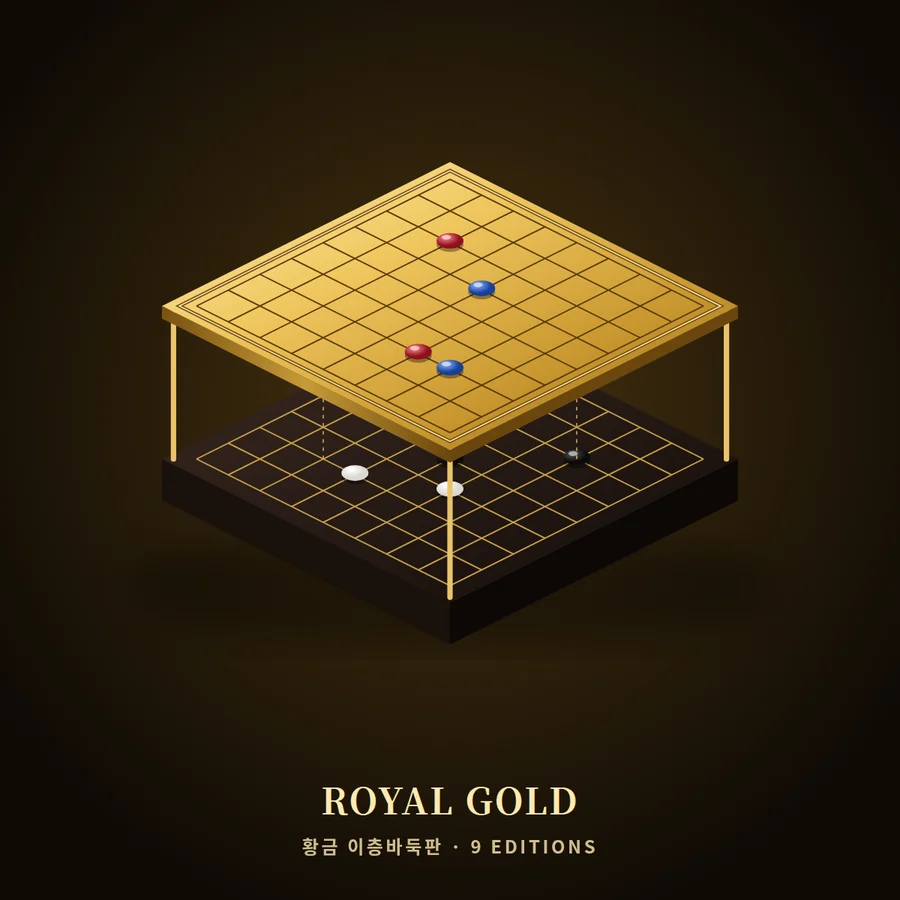
Two Go boards, stacked. White and black on floor 1, red and blue on floor 2. Yin and Yang connect across both floors, and a capture takes five blocked points instead of four.
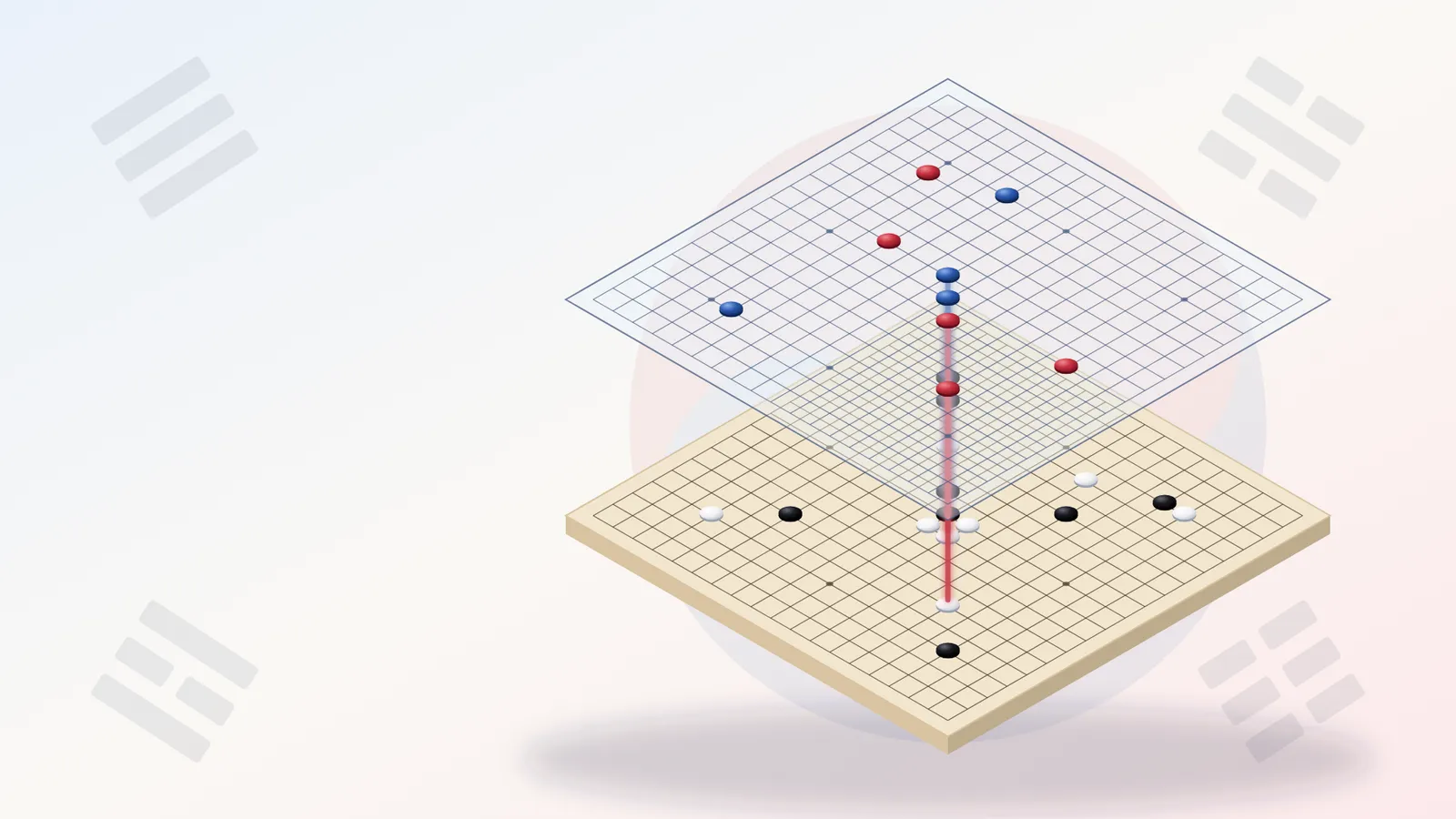
White and black below, red and blue above
Two-Layer Go is built on the harmony of yin and yang from the taegeuk. On floor 1, Yang plays white and Yin plays black. On floor 2 the colours change: Yang plays deep red and Yin plays blue. So white and red are one side (Yang), and black and blue are the other (Yin).
陽Yang side
- FLOOR 1
- White stone
- FLOOR 2
- Deep red stone
White and red are one side. A white stone and the red stone directly above it are connected. Yang receives komi 6.5.
Stones of the same side on the same point of different floors are connected: they live together and are captured together.
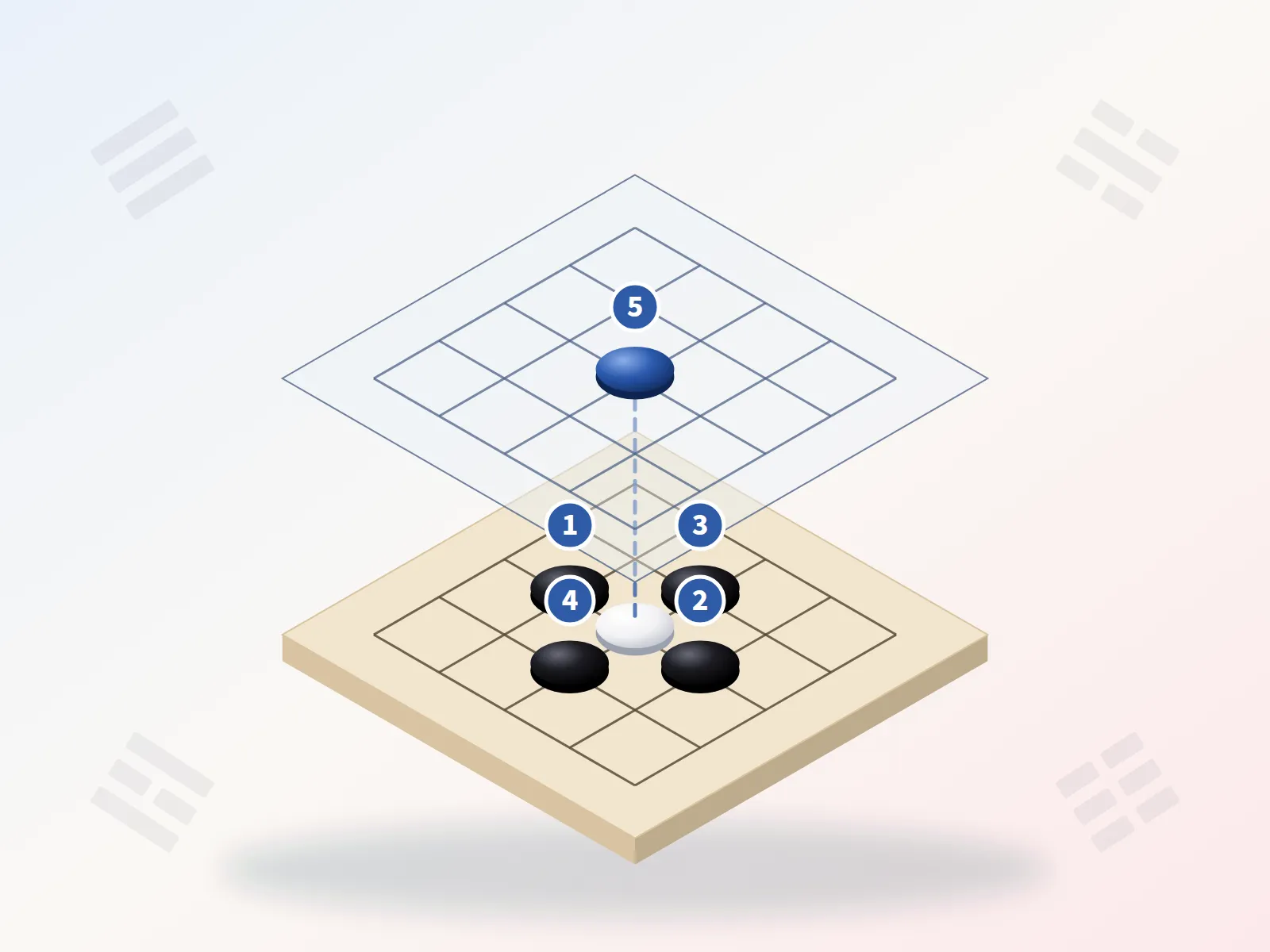
The fifth point is upstairs
In classic Go, blocking the four sides captures a stone. In Two-Layer Go, the same point on the other floor is a neighbour too. In the picture, the white (Yang) stone is captured by five Yin stones: four black on floor 1 and one blue on floor 2.
See all rules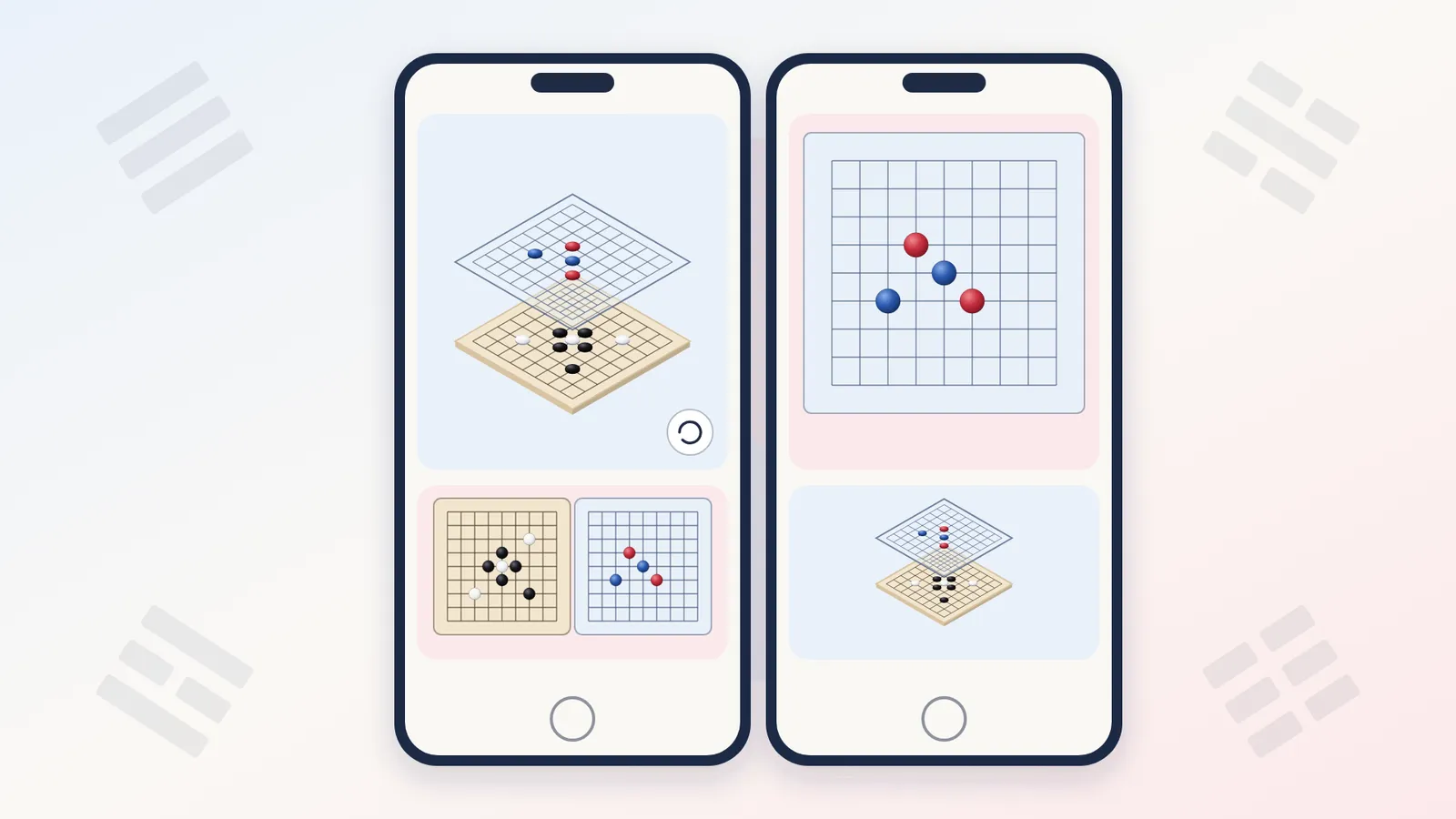
In your browser now, or install it like an app
See both floors at once in the 3D view, then play precisely on the per-floor boards. On a phone, use “Add to Home Screen” to install it like an app. Includes an AI opponent, two-player mode and a rules tutorial.
Gold and jade board NFTs and the M4A coin
Total supply 8 billion, sale reference price US$1. Read the whitepaper and roadmap, and get official announcements by email. Not on sale yet.
The game is patented. The boards are registered designs.
Multi-dimensional Go board and online system
Baduk board
Block-type baduk board
Lego-type Baduk Board